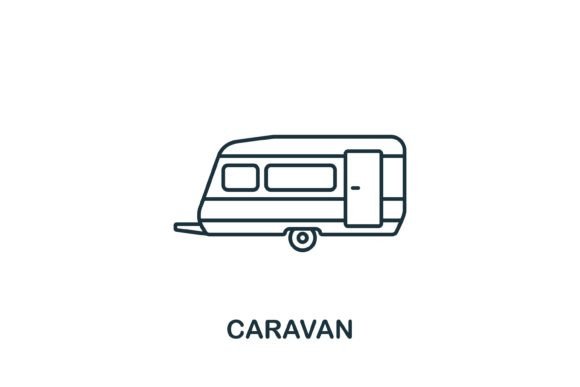
Caravan Icon Embroidery Review
When I sit down to evaluate a new digital asset for my studio, I am rarely looking at just a picture. I am looking at a potential finished product. I am thinking about thread tension, fabric grain, hoop stability, and the final tactile experience of the customer. Today, I am putting Caravan Icon under that same microscope. This is a line-art style graphic categorized under Icons and Graphics, designed originally for templates, web design, and infographics. But can it survive the transition from a screen to an embroidery machine? Can it hold up in a real-world commercial application?
The short answer is yes, but with specific caveats that every experienced embroiderer needs to consider. Let’s break down how this machine embroidery design translates into physical reality.
First Impressions and Visual Personality
The Caravan Icon presents itself as a simple, clean element. It captures the essence of outdoor recreation without cluttering the visual space. For designers who specialize in minimalist aesthetics or modern rustic themes, this symbol hits the right notes immediately. The line work is crisp, suggesting a high-contrast output when stitched. It evokes feelings of adventure, travel, and simplicity—themes that resonate deeply with today’s craft community.
What stands out is its versatility. Because it is a single-element icon rather than a complex scene, it possesses a strong visual identity. It does not rely on intricate shading or gradient fills to make an impact. Instead, it relies on shape recognition. In the world of branding, this is valuable. A customer scrolling through an Etsy shop or browsing a boutique rack will recognize the silhouette instantly. That immediate recognition builds trust and adds perceived value to the handmade product.
Real-World Application: From Screen to Stitch
Let’s imagine a practical scenario. You are preparing a collection of custom apparel for a local craft fair. Your target audience includes hikers, campers, and fans of the outdoors. You decide to create a line of tote bag designs featuring subtle, embroidered symbols. The Caravan Icon fits perfectly here.
On a canvas tote, this icon would likely be placed on the front pocket or centered on the chest area of a sweatshirt. Because the design is essentially a line drawing, it translates beautifully into satin stitch outlines or running stitch details. It avoids the pitfalls of dense fill stitches that can pucker lightweight fabrics. When executed correctly, the result is a sophisticated, professional-looking custom apparel item that feels curated rather than mass-produced.
This design also shines in personalization. Imagine a personalized gift for a couple embarking on their first road trip. The caravan symbol serves as a charming metaphor for their journey. On a baby onesie or a nursery pillow cover, the soft, rounded lines of the icon convey warmth and safety. It works equally well as an embroidered patch intended to be ironed or sewn onto denim jackets, adding a touch of personality to worn-in garments.
Technical Considerations for Embroidery Designers
While the aesthetic appeal is clear, the technical execution requires careful planning. Since the source files provided are vector-based (EPS, AI, SVG) alongside standard image formats (JPG), you have the flexibility to scale the design, but scaling introduces challenges regarding stitch density and detail resolution.
Hoop Size and Detail Retention
The most critical factor when working with line-art icons like the Caravan Icon is the hoop size. If you attempt to digitize or use this design in a very small hoop, the fine lines may become too thin to stitch cleanly. Thin stitches are prone to breaking, especially on synthetic threads. Conversely, if the design is scaled up too large without adjusting the stitch length, the lines may appear jagged or disconnected. I recommend testing this design in medium-sized hoops first to ensure the curves remain smooth and the endpoints are secure.
Fabric Texture and Stability
The choice of fabric plays a significant role in the final look. On a smooth cotton twill or a tightly woven linen, the Caravan Icon will appear sharp and defined. However, on textured fabrics like heavy wool or fuzzy fleece, the fine lines might get lost in the nap of the material. In such cases, you might need to increase the contrast by using a heavier gauge thread or opting for an applique approach where the icon is cut from a contrasting fabric and then stitched down.
Stabilizer selection is non-negotiable. Even though this is a light design, improper stabilization can lead to distortion. For knit fabrics like t-shirts or sweatshirts, a tear-away stabilizer underneath combined with a cut-away backing ensures the fabric remains flat during stitching. For woven fabrics used in home decor items like tea towels or aprons, a water-soluble topping can help keep the thread lies flat and vibrant.
Thread Color and Contrast
Because the design is monochromatic in nature, thread color choice is your primary tool for setting the mood. On dark fabric, a bright white or metallic gold thread will make the caravan pop, creating a striking commercial embroidery piece. On light fabric, a deep navy or forest green thread offers a subtle, elegant look. Always test your thread colors on scrap fabric before committing to the final product. Lighting conditions in your workspace can drastically alter how the thread appears compared to how it looks on a backlit monitor.
Where to Use Carefully
There are certain applications where the Caravan Icon might not perform as well. Avoid placing this design on highly curved surfaces like baseball caps unless you are using a specialized cap frame and have pre-tested the curvature. The straight lines of the icon may distort if the fabric stretches unevenly during stitching. Additionally, be cautious with stretchy fabrics like spandex blends; the lack of substantial fill stitch means the design has less structural integrity to resist stretching and washing.
Furthermore, while the design is simple, it is not devoid of detail. Tiny corners or sharp intersections in the line work can be difficult to execute cleanly if the digitization is not precise. Ensure that any sharp angles are slightly softened or that the stitch path is optimized to prevent thread breaks at the vertices.
Commercial Viability and Brand Consistency
For Etsy sellers and small business owners, the Caravan Icon offers excellent utility. Its clean aesthetic aligns well with current trends in bohemian and minimalist home decor. It is versatile enough to be part of a larger brand identity system, whether that involves matching logos, social media graphics, or packaging labels. Using a consistent visual language across all touchpoints enhances brand consistency and professionalism.
However, always verify the licensing terms associated with the file. While the description mentions easy-to-use formats, it is crucial to confirm whether you have the right to sell finished goods made from this design. Some graphics licenses restrict commercial use of the digital file itself, even if they allow for printed or embroidered merchandise. Clear communication with your customers about the handmade nature of your products builds loyalty and transparency.
Final Verdict
The Caravan Icon is a solid, adaptable asset for any designer’s toolkit. It successfully bridges the gap between digital graphic design and physical embroidery. Its strength lies in its simplicity and clarity, making it ideal for projects that demand elegance without complexity. Whether you are creating a holiday gift, updating your craft business inventory, or designing for a client’s corporate retreat, this icon delivers a polished result.
My advice is to treat it with respect. Test it thoroughly on your specific materials, pay attention to the nuances of stitch density, and let the clean lines speak for themselves. When done right, a simple caravan can tell a big story about adventure and craftsmanship.